

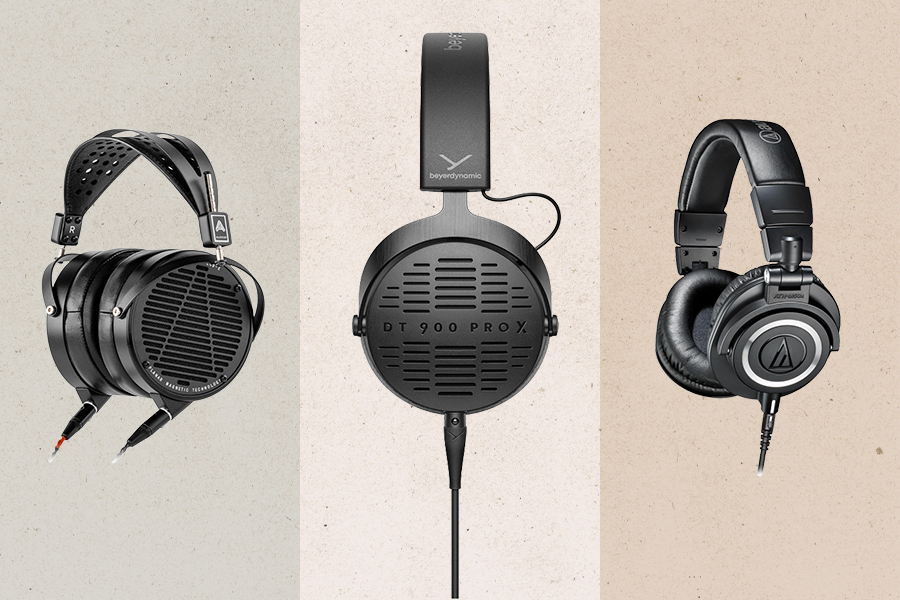
Wired Headphones Still Win at Audio Quality: 6 of the Best Pairs
Choosing to wear headphones instead of earbuds means you’ve made the conscious choice to sacrifice portability for audio quality, but you can take that commitment to sound quality a step further by picking up a pair of the best wired headphones.
Being tethered to your audio source is obviously less convenient and can cause snags, but it’s still the most reliable way to get high-quality audio from the source to your ears. It’s also much more affordable, and, as of late, the cool way to get your music. There’s an entire Instagram account called Wireditgirls that showcases celebs who’re rocking wired headphones, and Addison Rae made corded cans one of the centerpieces of her music video for last year’s single Headphones On.
At a Glance: The Best Wired Headphones
There are plenty of little reasons to choose wired headphones over a wireless pair: You never have to worry about charging them, you can listen to high-resolution audio without compression, and the components won’t degrade as quickly, which means you can use them for longer than most wireless cans. You also won’t have to deal with wired headphones cutting out if there’s a lot of wireless interference in densely populated areas.
Another reason why musicians, producers, DJs, and other audio professionals use wired headphones is the lack of latency, or lag. There’s a (typically) imperceptible amount of lag between when you hit play on your audio source and the music actually hitting your headphones. If you’re cutting a track, that little bit of lag may throw off a part of your song, making it sound wonky during production.
How We Tested the Best Wired Headphones
I tested the best wired headphones by listening to music from different genres and sources. The majority of my tests involved listening to lossless or high-resolution audio via Apple Music and 256kbps AAC files from my local music library. I also listened to CDs using Fosi Audio’s new Merak CD player. If the headphones terminated in a USB-C jack, I listened to music through my MacBook Pro and iPhone. If the headphones terminated in a 3.5mm audio jack, I stuck to listening on my laptop or to CDs.
What to Consider When Buying Wired Headphones
Headphone style: Headphones come in two styles: on-ear and over-ear. On-ear headphones are lighter and smaller, but don’t cover your entire ear like over-ear headphones do, which allows outside noises to leak in a little more. Over-ear headphones are bigger and heavier, but generally sound better overall, and create the best listening environment.
Open vs. Closed: Wired headphones can also be separated into open- and closed-back styles. Open-back headphones allow audio to freely leak in and out of them, but generally sound a little more like listening to music through speakers. Most headphones have a closed back, which isolates you from the world and doesn’t let sound leak out as much.
Connector type: I tested headphones that terminate in a USB-C jack, which allows you to plug them directly into a smartphone or tablet without an adapter, and models that terminate in a 3.5mm audio jack, which you can still find on some computers and CD players.
Active noise cancellation: One of the biggest technical features you give up when choosing wired headphones is active noise cancellation. You’ll still get passive noise cancellation (the result of your headphones’ padding providing insulation), but the difference between that and ANC is stark.
The Best Wired Headphones to Buy Right Now
Beyerdynamic DT 900 Pro X (Best Overall): Beyerdynamic continues to impress me with its entire range of headphones by offering cans that balance price and audio quality. The DT 900s are wonderful to wear thanks to their large velour ear cups, which are noticeably better than real or faux leather.
Audeze LCD-X (Premium Pick): Audeze’s LCD-X are hands down the best-sounding headphones I’ve ever tried, making them well worth the high price. The open-back headphones are large, but felt light on my head with enough clamping force to stay on.
JBL Tune 520C (Budget Pick): The Tune 520C didn’t have the same level of overall clarity as the other headphones I tested, but they were light, comfortable to wear, and didn’t have any obvious audio faults.
Sennheiser HD 400U (Best USB-C): Sennheiser’s HD 400U makes a great case for headphone makers to adopt USB-C connectors, or at least offer them as an option if you have a detachable cable.
Audio Technica ATH-M50X (Best Studio Monitors): Audio Technica’s ATM-M50X are a great pair of wired headphones for music listening, but they’re also well-suited for folks who want to make music thanks to their tuning.
Shure SRH440A (Best Noise Isolation): Giving up active noise canceling is the biggest technical hurdle when moving from wireless to wired headphones, but Shure’s SRH400A blocked enough noise at moderate volumes that I generally didn’t notice.