
Sonny Rollins, Jazz’s Saxophone Colossus, Dead at 95
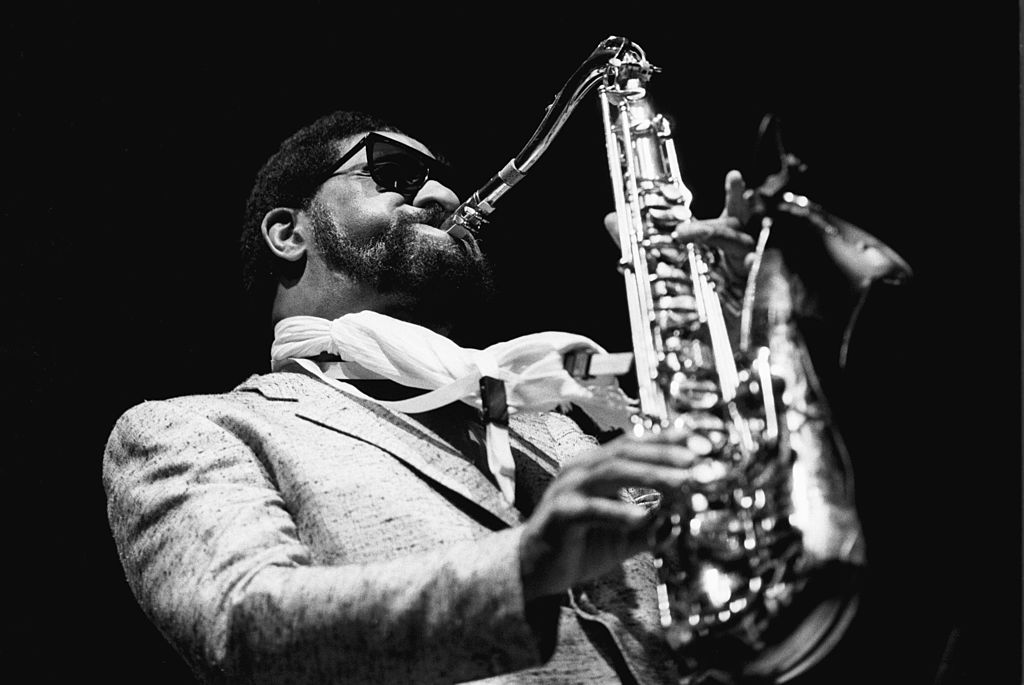
Sonny Rollins, the jazz legend dubbed the Saxophone Colossus who redefined the language of the genre with his inimitable improvisational skills, died on Monday at his home in Woodstock, NY. He was 95.
His death was confirmed in a statement by his publicist, Terri Hinte. A cause of death was not immediately available. The statement announcing Rollins’ death included a 2009 quote from the musician: “I think when the creative person ends, he continues in the next existence. I’m a person who believes this life isn’t the be-all and end-all of everything. A spiritual person doesn’t feel like that.”
The Harlem-raised Rollins came to jazz at an early age, first as a pianist before switching to the saxophone. “My mother gave me my first saxophone, an alto saxophone, when I was 7 years old. I got the saxophone and I went into the bedroom and I started playing — that was it,” Rollins told Jazz Times. “I was in seventh heaven. My mother had to call me: ‘It’s time to eat dinner and come out.’ I could have been there forever. I love playing by myself. I’m practicing but I’m also communicating with my musical muse.”
While still in high school, Rollins honed his craft on the tenor saxophone alongside fellow Harlem classmates Jackie McLean and Art Taylor, and upon graduation, immediately joined bands led by established bebop greats like trumpeter Fats Navarro and pianist Bud Powell; one of Rollins’ earliest recorded appearances was on 1949’s The Amazing Bud Powell, a landmark in the hard bop genre that Rollins would soon pioneer.
Rollins’ trajectory was briefly halted by a stint in prison for armed robbery and a heroin addiction that he managed to kick by the mid-Fifties, but amid his troubles was able to participate in the historic 1951 session that yielded Miles Davis’ Dig. Additional sessions alongside Davis would result in Collectors’ Items and Bags’ Groove, the latter featuring the Rollins-penned “Oleo,” a signature tune that would become a jazz standard and performed by the likes of Davis, Coltrane, Eric Dolphy and countless more.
In a career that spanned decades — from the late 1940s to his retirement in 2014 — the Fifties were perhaps Rollins’ most fertile period, with the saxophonist playing sideman on jazz classics by Thelonious Monk (Monk, Brilliant Corners), Dizzy Gillespie, Max Roach, and Davis in addition to his most vital string of albums as bandleader.
Recording for Bob Weinstock’s Prestige Records for the middle part of the decade, the saxophonist released his Sonny Rollins With the Modern Jazz Quartet, Moving Out, Work Time, Sonny Rollins Plus 4 and Tenor Madness (the title track featuring Rollins alongside an emerging John Coltrane) before Rollins recorded what’s considered his tour de force as band leader, 1957’s Saxophone Colossus.
“To saxophonist Sonny Rollins, the recording of Saxophone Colossus didn’t seem that different from any of his previous albums. To jazz fans, however, it would become… one of the defining albums of Rollins’ career,” the Library of Congress wrote in 2017 when the album was entered into the National Recording Registry. “With only five tracks and under 40 minutes, the album may appear slight, but the quality of the music has earned it a place of honor among jazz fans for more than 60 years. Solidly anchored by a rhythm section of drummer Max Roach, bassist Doug Watkins and pianist Tommy Flanagan, Rollins is able to solo with power, grace and humor.”
In 1981, Rollins made one of his most enduring appearances by providing the sax solo on the Rolling Stones’ Tattoo You hit “Waiting on a Friend,” with drummer Charlie Watts — long an admirer of Rollins’ — recommending him to his bandmates, and Rollins’ own wife encouraging him to participate. “There are people who burn bright and fade quickly, and there are those who burn bright and keep going. You have to admire that. Sonny has never made a bad record – ever; some are simply greater than others,” Watts said of Rollins in 2010.
Rollins received the Grammys’ Lifetime Achievement Award in 2004, followed by a National Medal of Arts in 2010 and the Kennedy Center Honors in 2011. However, in 2012, Rollins played what would be his last concert and, two years later, revealed his retirement from music due to pulmonary fibrosis. “My main problem is that I can’t blow my horn anymore. I’m surviving, but my problem is I can’t blow my horn,” Rollins told The New Yorker during the Covid-19 pandemic.