

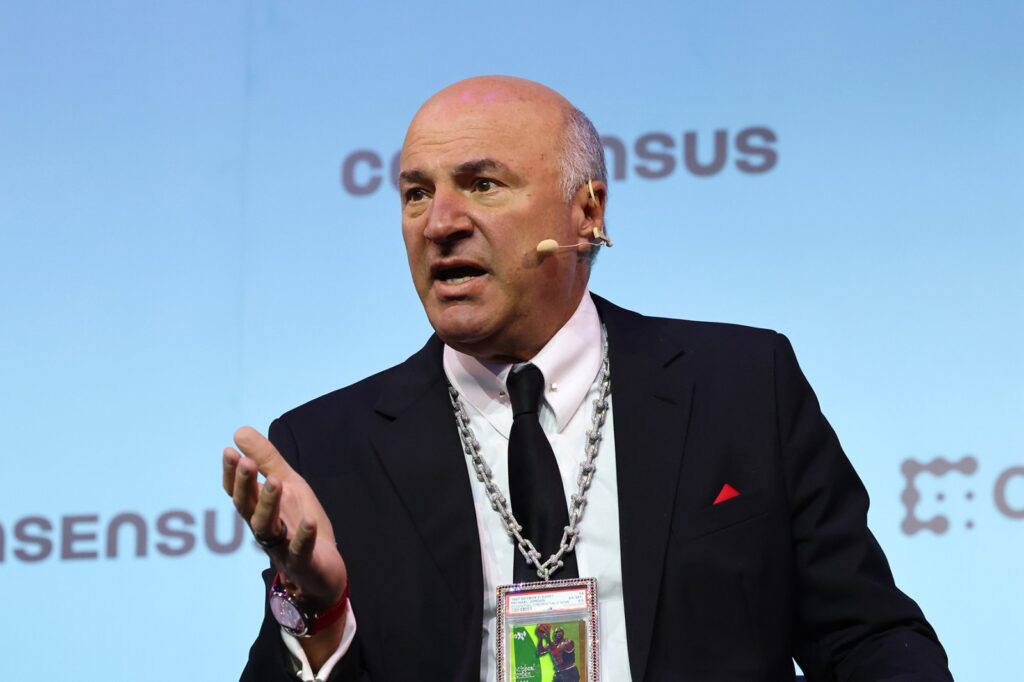
The Controversy Surrounding Kevin O’Leary’s Utah Data Center
Earlier this month, Republican county commissioners fast-tracked approval for a 40,000-acre data center in northwest Utah, effectively bypassing public comment from hundreds of concerned locals. The project, known as Stratos, is backed by Shark Tank entrepreneur Kevin O’Leary through his investment firm, O’Leary Digital. Designed to reach a 9-gigawatt power capacity, the facility is poised to become one of the largest hyperscale data centers in the world. At a projected $100 billion buildout, the center would consume and generate twice as much power as the entire state of Utah currently utilizes.
Public Outcry and Local Resistance
Despite significant public opposition, Box Elder County commissioners unanimously approved the project following a contentious meeting at the county fairgrounds on May 4. Commissioner Boyd Bingham faced backlash after telling protestors to “grow up” before the commission moved to a closed session to finalize the 3-0 vote. While O’Leary did not attend the meeting, he later claimed on social media that the protestors were “professional… paid, and bused in.” Environmental advocate and former U.S. Senate candidate Caroline Gleich countered these claims, stating, “Utahns don’t want an out-of-state billionaire controlling our land.”
Environmental and Resource Concerns
The project arrives at a precarious time for Utah, which is currently grappling with a critical water shortage following the warmest winter in over a century. Scientists warn that the heat and emissions generated by a facility of this scale could devastate an already fragile desert ecosystem. There is particular concern regarding the impact on the Great Salt Lake, as the massive water requirements for cooling could drain local aquifers and intensify exposure to toxic sediments. Patrick Belmont, a professor of watershed sciences at Utah State University, likened the project to “putting a hairdryer that has the energy consumption of New York City in the middle of a fragile desert ecosystem.”
Regulatory Scrutiny and National Security
The project has been championed by Utah’s Military Installation Development Authority (MIDA), which has faced criticism for its role in facilitating private developments on public land. While MIDA officials and Governor Spencer Cox have framed the Stratos project as a matter of national security necessary to win the global technology race, activists remain skeptical. Caroline Gleich notes that MIDA’s involvement appears to be a mechanism to fast-track construction while avoiding rigorous environmental review. As the debate continues, the future of the Stratos project remains a flashpoint for discussions on corporate influence, environmental stewardship, and the democratic process in rural America.