

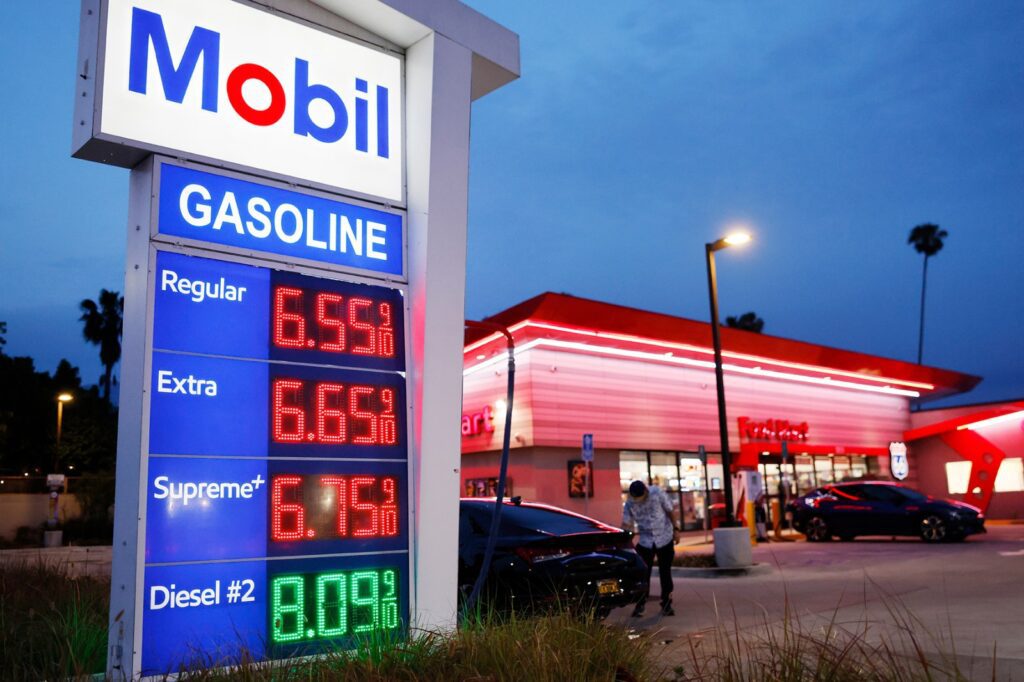
The Trump Administration’s Conflicting Messaging on Rising Gas Prices
Donald Trump’s ongoing conflict with Iran is reverberating far beyond the battlefield, creating significant instability in fuel and transportation costs across the United States. As gas prices continue to tick upward, visible at stations nationwide, the American public is left searching for clarity—a clarity that the current administration has yet to provide.
A Pattern of Contradiction
When faced with market volatility, the administration’s response has been marked by a series of baffling public contradictions. While the president has built his platform on a promise of economic affordability, the reality of fuel scarcity, exacerbated by the blockade of the Strait of Hormuz, has proven difficult to manage through rhetoric alone. The administration’s economic optimism often clashes with the material reality of rising costs, leading to a disjointed narrative from the president and his key advisers.
On Sunday, Energy Secretary Chris Wright offered a sobering assessment to CNN’s Jake Tapper, suggesting that gas prices might not dip below $3 per gallon until later this year or even next year. This stood in stark contrast to his earlier, more optimistic predictions that the price spike would be a short-lived, weeks-long issue.
“Prices have likely peaked, and they’ll start going down. Certainly, with a resolution to this conflict, you’ll see prices go down,” Wright added.
By Monday, the president publicly rebuked his own secretary, telling The Hill that Wright was “totally wrong” and insisting that prices would fall immediately upon the conclusion of the war. This internal friction is compounded by the president’s own shifting statements. Only days prior, he had told reporters that “prices are not very high” and that the economy was performing well, despite having previously conceded to Fox News’ Maria Bartiromo that prices could potentially rise further by the time the midterms arrive.
The Political Fallout
As the November midterms approach, the administration’s strategy appears to mirror the very approach that contributed to the political struggles of the previous administration: minimizing the public’s economic concerns. Treasury Secretary Scott Bessent recently dismissed concerns over the economy, suggesting that Americans “feel good” in their “heart of hearts” despite polling data that suggests otherwise.
White House Press Secretary Karoline Leavitt has similarly framed criticism of the administration’s handling of the war and its economic consequences as being “rooted against this president.” Meanwhile, the administration continues to highlight minor, incremental decreases in gas prices while ignoring the broader, nearly 30-percent spike that has occurred since the conflict began.
With the president signaling that he is prepared to continue military action if negotiations fail, the uncertainty surrounding energy prices remains high. For the average American, the reality of the pump remains a more reliable indicator of the economic climate than the shifting promises emanating from the White House.