Why Are Celebrities on GoFundMe? And Why Are We Giving Them So Much Cash?
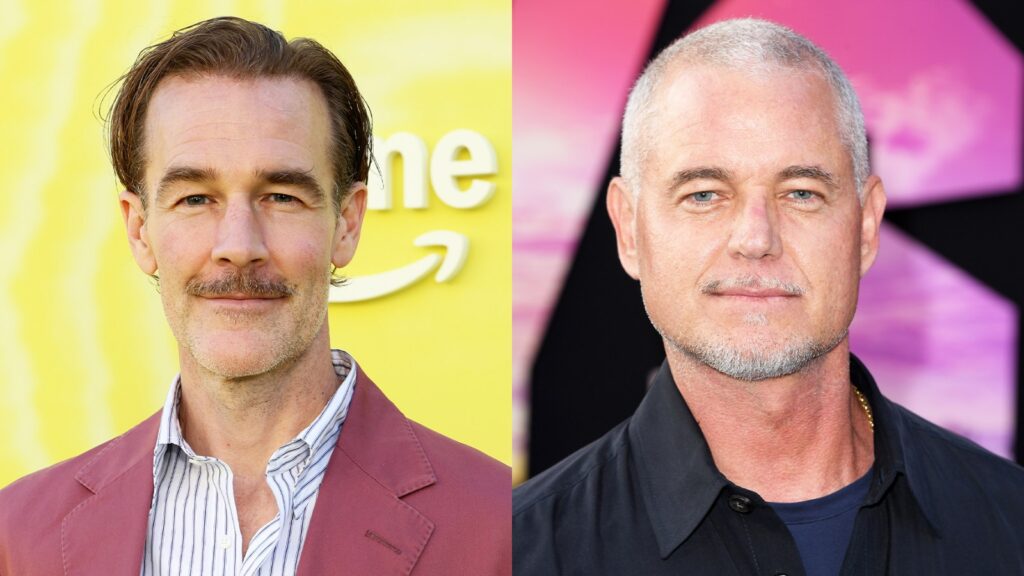
First there was the outpouring of grief. Following the deaths earlier this month of James Van Der Beek and Eric Dane, both from debilitating long-term illnesses, fans flocked to social media to express their condolences. “Thank you, James for giving us Dawson,” said one on Van Der Beek’s Instagram page, referring to his starring role on the Nineties teen soap Dawson’s Creek. Another wrote on X that they were devastated by Grey’s Anatomy star Dane’s death: “The way that ALS claims someone’s life so fast is heartbreaking,” they wrote. “McSteamy will forever live on.” Both men left young families behind, and in the wake of their deaths, friends of the actors set up respective GoFundMe pages to help financially support them during tough times.
Then came the backlash. Within days, some fans started to question why celebrities, who they presumed were wealthy, would come to regular folks asking for money. “If millionaires need fundraising, what hope is there for the rest of us?” said one Reddit critic. Another said, “I’m going to sound like an ass but… Is this going to be a thing now?”
Well, the answer to the latter is, likely, yes. The discourse that followed these crowdfunding campaigns highlights both misgivings about celebrity wealth, as well as the degree to which health-care costs have soared even beyond the reach of the “haves,” not just the “have-nots.” Throughout all of this, GoFundMe has emerged as a social-media hub for fostering the parasocial relationship between fans and public figures.
“It’s a natural human tendency to want to respond to the grief of another person with some kind of support,” says psychology professor Gayle Stever, who studies parasocial relationships. “Even if it’s somebody that maybe you never met, but they still possibly had a big influence on you.”
But experts tell Rolling Stone that the amount of money and attention Dane’s and Van Der Beek’s campaigns have raised means the trend of crowdfunding cash for celebrities will likely grow, especially given the history of who successfully raises money and who gets left out.
ON FEB. 11, VAN DER BEEK, BEST known for his roles in Dawson’s Creek and Varsity Blues, died at 48 due to colorectal cancer. His wife, Kimberly, posted the news on social media and provided a link to his GoFundMe. According to Van Der Beek’s page, his medical care had left his wife and six children “out of funds,” and they needed donations to help “cover essential living expenses, pay bills, and support the children’s education.” So far, his fund has raised $2.7 million.
While some large donations came from fellow celebrities like Steven Spielberg and Zoe Saldaña, many smaller donations were from people around the world who were fans of the actor.
“James, with his role as Dawson, was a part of my childhood,” wrote one fan, Alexandra, from France, who donated $23. “The results of this fundraiser are proof of his impact on the world and how much he was loved.”
Eight days later, Dane, who suffered from ALS, died at 53. The GoFundMe page that sprung up was temporarily put on hold as the crowdfunder’s trust and safety team reviewed the appeal to confirm proceeds would benefit Dane’s family. Following that verification, the actor’s widow, Rebecca Gayheart, is now listed as the beneficiary, but it’s unclear what, if any, role she played in setting up the campaign. So far, Dane’s GoFundMe has raised $466,937 of the $500,000 ask.
On Dane’s page, a fan named Petra donated $13 and wrote, “No celebrity loss has ever grabbed me the way his has. A man of his calibre, gone so young to such a cruel disease… it is mind-boggling and deeply painful.”
Some of the donations to Dane and Van Der Beek are from people struggling to make ends nmeet. A fan named Sarah donated $5 to Van Der Beek’s family and said she was “making this symbolic donation in support” even though she faces serious hardship, unpaid bills, and the risk of eviction from her home. A mom named Cristina donated $5 to Dane’s campaign with an apology: “I have Stage 4 Cancer and am living on social security so I couldn’t donate more, sorry. I have a young daughter myself so I know how awful it can be having a terminal illness and leaving behind a child.”
AS THE DONATIONS FOR VAN DER BEEK AND Dane poured in, people on social media started to criticize the amount of money raised for famous actors, while trying to dissect the lives of the grieving families and accusing them of “grifting.” (GoFundMe has a fundraising average of about $2,500, according to one research study.)
Van Der Beek had spoken in the past about the lack of residual money he got from playing Dawson, and in the months leading up to his death sold off paraphernalia from his TV series and films to help cover medical costs. Still, when his GoFundMe raised more than $2 million dollars in less than 48 hours, the backlash grew. Commenters questioned why fans should help maintain his family’s lifestyle, including payments on a $4.8 million, 36-acre Austin ranch the family had been renting. (The actor’s representatives told People that before he died, Van Der Beek had “secured a down payment for the Texas ranch for the family with the help of friends through a trust,” though it’s unclear what became of this.)
When Dane died days after Van Der Beek and his friends also launched a GoFundMe, some social media users decried class inequity.
“Not to sound insensitive but rich celebrities families launching GoFundMes and using their popularity to get overwhelming donations when the economy is shit and people are struggling to afford everyday essentials doesn’t feel right,” posted one Reddit user. “Sad he’s gone but he was a part of some of the biggest shows in TV history, I’m sure his coworkers/ production houses can donate to his family instead of sharing with the public.”
Alyssa Milano penned a Substack pushing back against the backlash, arguing that people shouldn’t assume someone’s financial situation just because they were once a successful actor. “A recognizable face from a beloved show fifteen years ago does not guarantee permanent wealth,” wrote Milano. “The idea that once you’ve been on a hit show you are permanently insulated from financial vulnerability is just not today’s reality.” Milano argued that when friends of the actors organized GoFundMe campaigns, they were simply passing the hat, as communities often do when someone is ill or grieving.
Similarly, Dane’s former Grey’s co-star Kate Walsh defended his family’s campaign on Instagram, writing, “A lot of people… are under the misconception that actors are rich, but when they go through these debilitating illnesses, they go through all their funds.”
DANE AND VAN DER BEEK AREN’T the only celebrity GoFundMes that have launched this month. Friends of America’s Next Top Model Miss J. Alexander started a campaign for medical expenses related to his recovery from a stroke that left him unable to walk. Miss J’s stroke occurred in 2022 but was just publicly disclosed for the first time in new Netflix docuseries Reality Check: Inside America’s Next Top Model. “We are hoping to secure full-time, round-the-clock care and help with the on-going regular physical, speech, and occupational therapies,” reads his page. So far, about $27,870 of his $50,000 ask has been funded.
GoFundMes have increasingly become a lifeline for those needing to pay medical bills. It’s likely we’re going to start seeing more celebrities making them, says Aaron Davis, a community-based public health researcher at the University of Washington who has studied medical crowdfunding. Davis, who goes by they/them pronouns, says this is due to rising medical costs, plus the fact that Van Der Beek’s and Dane’s campaigns performed so well so quickly.
“We’re just going to see it more and more as health costs keep rising, and as there’s no social response, no government response, no universal health care,” says Davis. “We’re not moving in that direction of democratizing care and making it more accessible.”
Fans have chipped in to help out their favorite stars before. Stever, the psychologist, recounts how Star Trek: Deep Space Nine fans crowdfunded for actor Aron Eisenberg while he was undergoing surgery for a second kidney transplant. In fact, his new kidney came from a fan.
Stever says many fans offered themselves up as potential donors. “That’s a particularly interesting case, because that’s a whole lot more than money,” says Stever. Eisenberg died in 2019.
The advent of social media has deepened the connection between social media and their fans, Stever explains. The first studies on parasocial relationships, in the Eighties, were about soap opera stars and newscasters, since that was who people used to feel familiar with on a daily basis. And in the past, she says, these parasocial relationships converged with reality when fans met celebrities at conventions or book signings. More recently, social media has allowed people even more direct access to celebrities, blurring the lines between one-sided and reciprocal interactions. Now, crowdfunding sites can take it one step further, giving fans a chance to show their support monetarily.
“We have feelings for people we feel a connection with, and when they’re going through bad times, we support them — and recognize the fact that all these famous people aren’t necessarily wealthy,” says Stever.
ISSUES COME WITH MAKING FINANCIAL support a popularity contest, though. Using technology for medical crowdfunding amplifies social biases, says Davis. They’re concerned that relying on GoFundMes can stifle the progress of health-care reform because it provides a stopgap to get needs met for some people, but doesn’t solve a systemic problem.
“It’s almost like a different version of bootstrapping — if you work a little harder, if you create a compelling story and share it with enough people, you too will get taken care of,” says Davis, pointing out that people with more resources also have access to better means of communication and storytelling. “And that’s just not the reality for most people.”
In May 2023, Davis released the results of a study about racial and gender disparities among medical crowdfunding campaigns that were “highly successful,” defined as raising more than $100,000. They found that the more marginalized identities someone holds, the less likely they are to get donations. Men were more likely to have highly successful campaigns than women, and 80 percent of these campaigns were for white people.
White men had the highest median amount raised at $186,180, which was $30,000 to 50,000 more than other race and gender groups. Of campaigns making at least $100,000, only 0.06 percent were represented by Black women, almost none of which made anywhere near their goal.
Davis worries people might see campaigns like Van Der Beek’s raising so much money quickly and think that crowdfunding will solve their medical issues, too.
“The reality is, it’s a small amount of people who are actually finding success in paying for care through these websites,” Davis says.
Rather than judging which grieving families do and do not deserve support for health care, Davis says we as a society need to embark on a critical unpacking of how our leaders, government, and systems should do better.
“I don’t think either of these gentlemen should have had to crowdfund,” says Davis. “There should have been systems in place within Hollywood and within their structures to take care of folks. And everyday citizens who do not have notoriety deserve to be taken care of, as well.”