

Riverside Church Abuse Trial Opens With Dramatic Testimony
A trial about a dark chapter in basketball history opened Thursday in New York with a former player testifying that the multimillionaire coach of the pioneering Riverside Church youth basketball team regularly molested him as a child, but the program’s prestige and the stigma of speaking out about sexual abuse kept him silent for nearly 50 years.
Daryl Powell, a Marist College star in the early 1980s, is one of 27 men suing Riverside under New York’s 2019 Child Victims Act, and the case, held in New York State Supreme Court, is among the first in the city to go to trial under the law. As detailed in a joint investigation by Rolling Stone and Sportico, Powell and his fellow plaintiffs claim the church negligently failed to supervise Ernest Lorch, the longtime head of the basketball program and a former church trustee who died in 2012, and should have known of his alleged propensity to prey on kids from New York’s poorest neighborhoods.
Riverside has denied any wrongdoing by the church or its officials, and reiterated that stance Thursday during opening arguments. Attorney Phil Semprevivo told the jury that if there was abuse by Lorch, “that’s essentially on him” and not the church.
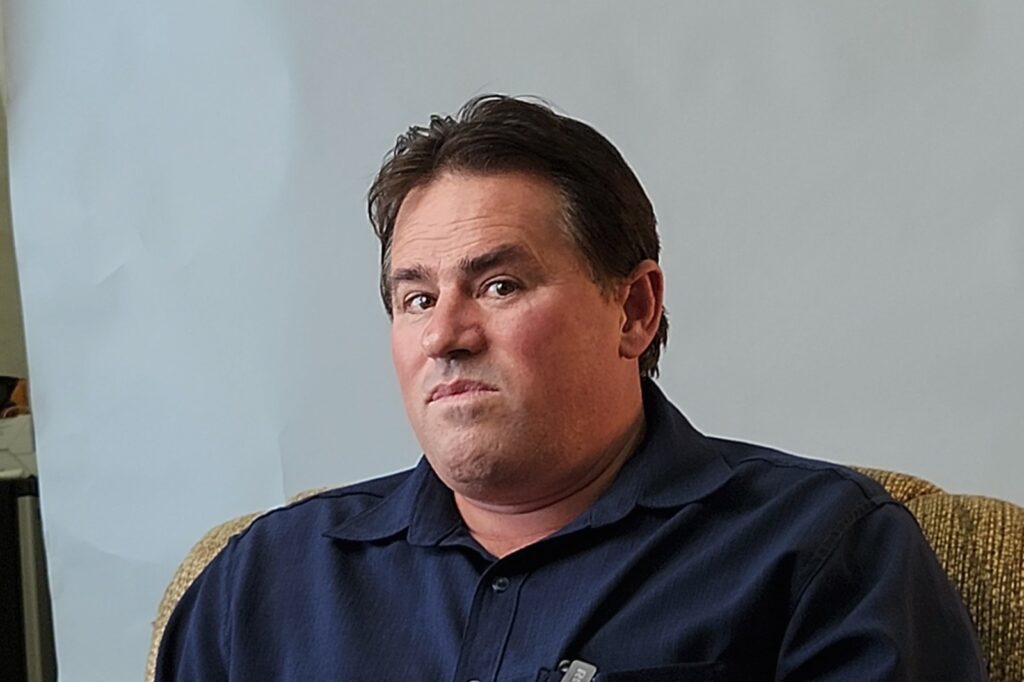
Dressed in a sweater vest and a headset to aid what he described as severe hearing loss, Powell, who filled the witness stand with his 6-foot-5-inch frame, graphically described how Lorch frequently abused him. Lorch, Powell said, fondled him as a teen during “jockstrap inspections,” rubbed his bare buttocks and told him to be a “good boy” after paddling him with four or five “hard whacks,” and sniffed his genitals after practices to check if he’d showered. “I could feel his breath on them,” Powell testified.
Asked how he felt after Lorch’s abuse and later as an adult, Powell began to cry and answered: “I never thought a man would do something like that to me. I was scared, frightened, angry, lonely, and heartbroken.”
Yet he stayed with the program into his early twenties because Riverside also offered him the hope of escape from the grinding poverty his family endured in 1970s Harlem. “I lived in a very deprived neighborhood — the ghetto, very messy with a lot of drug addicts, running numbers, a lot of people on the street, gang-infested,” he testified.
The lure of a coveted Riverside jacket, bag, and sneakers enticed Powell to try out for the team. Later, Lorch frequently gave him money for food and took him on team trips across the country and around the world, including the former Yugoslavia, and eventually helped land him junior college and major college scholarships.
Lorch also pulled strings to get him into high school. As a Manhattan native, public school league rules forbade Powell from playing for a school outside the borough. But somehow, he testified, Lorch got him into DeWitt Clinton High School in the Bronx, a powerhouse at the time. “It was like making the NBA,” Powell testified.
In a rare moment of levity, Powell recited names of some Clinton basketball greats: “Tiny Archibald [an NBA Hall of Famer], Butch Lee [a star at Marquette and in the 1976 Olympics] … myself.”
Powell testified that he never felt he could tell anyone about the alleged abuse. Lorch represented “a father figure,” he said, something that was absent in Powell’s home life. The subject was also so taboo in that era that he felt there was no way he could admit to what happened. “We couldn’t disclose that,” he testified, “because at that time, you didn’t want to be a faggot or a homo.”
Powell revealed in a previously undisclosed incident that he once told a Riverside assistant coach, Kenny “Eggman” Williamson, about Lorch’s abuse. Williamson was a prominent figure in New York basketball circles who went on to become a successful college assistant coach, pro scout, and NBA front office executive. He died of cancer in 2012 while serving as the assistant general manager of the Memphis Grizzlies.
Powell had previously been asked in his 2023 deposition for the lawsuit whether he had spoken about abuse to Williamson and replied, “No.” But on Thursday, Powell said he remembered the exchange clearly because it happened the day of the infamous New York City blackout of 1977. Powell testified he was at a tournament where Williamson was coaching him, which was canceled because of rioting. Williamson took Powell home with him rather than letting him go back to his unsafe neighborhood.
Semprevivo, Riverside’s attorney, objected to the testimony, pausing the proceedings before Powell could answer fully. Eventually, Judge Alexander Tisch overruled the objection and allowed Powell to continue. “I had a moment now, one on one, with somebody I trust,” Powell testified, referring to a discussion with Williamson that day. “I said, ‘Mr. Lorch is looking down my shorts, hitting me with the paddle.’”
According to Powell, Williamson told him, “If you know what I know, you better not say anything, or you’re not playing for this team anymore.”
Powell continued: “I was devastated. I shut my mouth up. I wanted to stay on the team.”
The trial’s first day also revealed both sides’ strategies, which could have an effect on the 26 other lawsuits. In his opening statement, Powell’s attorney Paul Mones said the plaintiff will prove Riverside allowed Lorch to “operate completely on his own and abuse him” and other players, either because those in the church hierarchy were “incompetent or they just didn’t care.” Either way, Mones said, “The church was negligent.” The attorney called it “a heartbreaking failure on the part of an esteemed institution” to protect a person under their care.
Powell’s side is expected to call two fellow teammates and plaintiffs, Mitchell Shuler and Byron Walker, to the stand during the trial.
In Riverside’s opening statement, Semprevivo reminded the jury, consisting of six jurors and three alternates, that “the burden of proof” belongs to “the plaintiffs, not Riverside.” He told the jury they’d have to ask whether plaintiff witnesses “have an interest in this case.”
The defense also seems keen to claim Powell’s hardships in life aren’t attributable to his time with Riverside, saying there was no current harm “with respect to these allegations.” To that point, Powell at times seemed to struggle to elaborate on specific examples of what damage he suffered as an adult from Lorch’s abuse, though he brought up issues with his marriages and with women generally.
Semprevivo also said the jury should consider why Powell waited so long to bring suit. Throughout his adulthood, Semprevivo said, Powell had “opportunities to be heard” but did not take them.
On Friday morning, Riverside attorneys will cross-examine Powell. The trial is expected to continue into next week.