
Nick Reiner and the Weight of a Famous Name
Last Sunday night, I set my phone to ‘do not disturb’ and went to bed early. I always make a point of not looking at my phone if I wake up in the middle of the night, but for some reason I was compelled to glance at the screen. It was 1 a.m. (which meant I had gone to sleep too early) and I saw dozens of texts blasting the horrific news: that Rob and Michele Reiner had been murdered with all signs indicating that the killer was their 32-year-old son, Nick.
I knew Nick Reiner. Eight years ago, he came to my apartment on the lower east side of Manhattan to record an episode of Dopey, the podcast I host.
I started Dopey: On the Dark Comedy of Drug Addiction in the fall of 2015 with my friend Chris O’Connor. Chris and I met at rehab — Mountainside in rural Connecticut — and we bonded over our crazy drug stories and similar worldview. I was a huge fan of the Howard Stern Show and knew we could adopt that unfiltered, talk show style for a podcast about addiction and recovery. We made 44 episodes by September of 2016, when Nick Reiner came over for the first time.
From my faithful Howard listening, I had heard Nick and his dad, Rob Reiner, talking about their new movie, Being Charlie, on the show. It was a film Nick had written with a friend he met in rehab, and it was all about drug addiction and recovery. I surmised he would be a great guest on Dopey.
Being Charlie felt like a thinly veiled take on Nick’s relationship with his successful and famous father, a Hollywood legend if ever there was one. Like most of the country, I was a big fan of Rob Reiner. Watching All in the Family on TV felt like it was a broadcast of Sunday at my grandparents’ house. I grew up on a steady Gen X movie diet of The Princess Bride, Stand By Me and A Few Good Men. I also worked (and still do) for Katz’s Deli, the iconic restaurant on East Houston Street that Rob Reiner immortalized in his classic comedy, When Harry Met Sally.
I believed Nick’s perspective and stories would be valuable for our listeners — and I was beyond excited at the fantasy of potentially having someone of Rob’s stature involved with our little show. Nick was super psyched to come on and talk drugs, addiction, and dumb shit with me and Chris. He fit in perfectly even though Chris and I were abstinent from drugs and alcohol at the time and working 12-step programs.
Nick’s recovery was different from ours. He was trying a harm reductionist method — admitting to smoking weed and drinking a bit, but trying to stay away from coke, meth, and heroin. Nick also spoke of the pressures of being a Reiner (the family’s Hollywood bonafides extended to Nick’s grandfather, Carl Reiner), while trying to pursue a creative career. Living up to the legacy was next to impossible. And worse for Nick, he realized that so many of his interactions were transactional, with people wanting to get close to his dad.
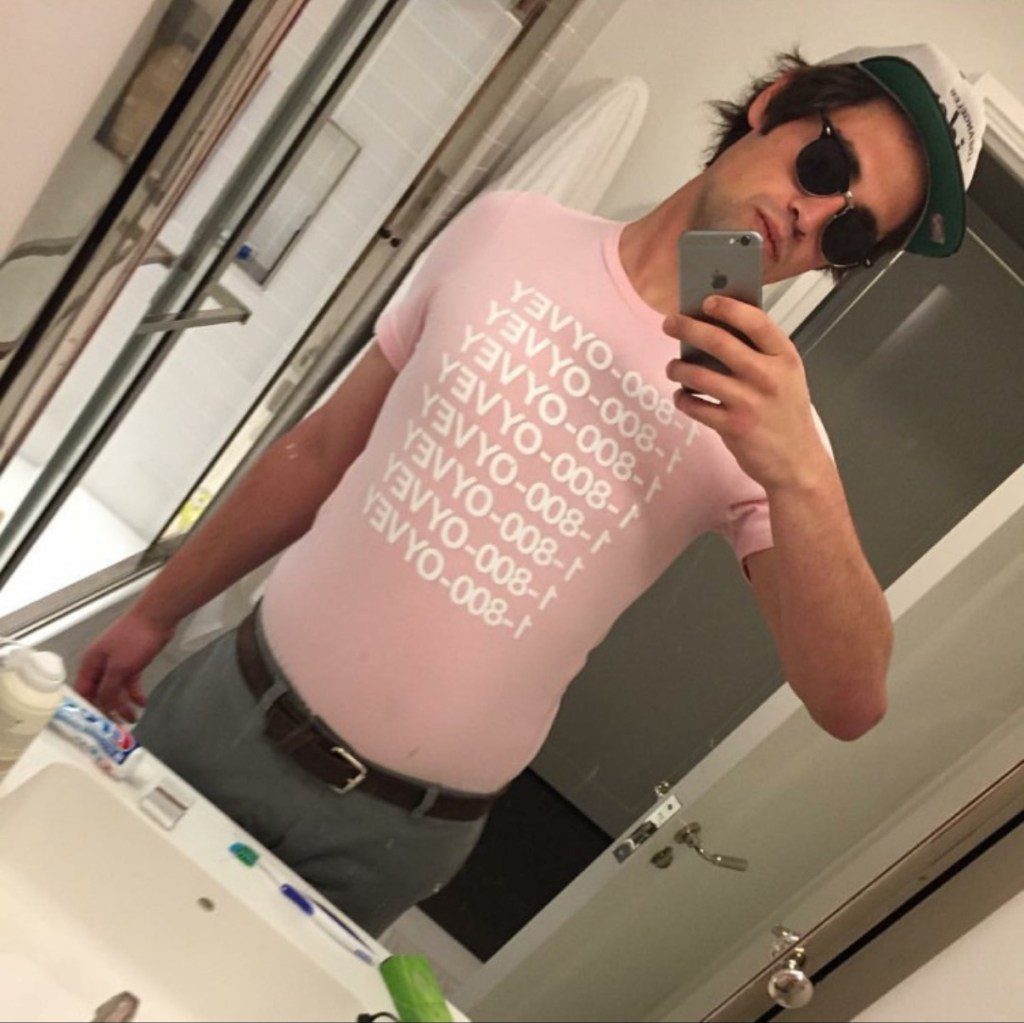
Around that time, I was also working on a parody clothing brand called Oy Vey. It predated Dopey and was my first attempt at building something while sober. The idea was culture-jamming — knockoff versions of familiar brands like Obey and Nike, flipped to Oy Vey. It didn’t succeed. Nick was our first and only celebrity model. He wore a 1-800-Oy Vey T-shirt in the style of Drake, as seen in this selfie he sent to me in 2017.
Nick Reiner in a 2017 selfie
Courtesy of David Manhe
I wanted his dad to see our Nike-style Oy Vey hat, figuring Rob would get a kick out of it. Nick said he would pass one along and I was pleased. I didn’t consider that asking him to give Rob Reiner a hat would set him down that same painful path — where people were more interested in Rob’s approval and attention than in Nick.
We saw Nick one more time a few weeks later. He came back and the three of us had a fun and easy podcast, talking shit and laughing about the dumb stuff we’d done. (You can hear it here.) Nick impressed us with stories of playing pick-up basketball games on the legendary West 4th Street courts. He also told a ridiculously touching tale about having a bad trip on LSD, and his dad talking him down. He recounted how he and his dad were lying together in bed while the acid took a turn. Nick then did a great impression of Rob Reiner telling his son that everything would be ok. It was beyond sweet.
I never saw Nick in person again after that. We texted a bit and spoke on the phone a few times. It wasn’t until after Chris relapsed and tragically died from a fentanyl overdose that Nick called back to the show. That time, he told his now well-circulated story of being “spun out on uppers” and destroying his parents’ guest house. Another time he called me off-air as he tried to get clean in New England. I offered my friendship and support in sobriety. We spoke and texted a few more times, until he disappeared again.
The last time we spoke in August 2018, it was for Dopey’s first memorial episode remembering Chris. We called it “Chris-Miss.” Nick called in and I asked him if he ever gave his father the Oy Vey hat. Nick got super defensive. “No, I didn’t,” he said annoyed. “And I never will.” He didn’t sound sober and hurried off the phone.
That was the last time I ever communicated with Nick. I probably have texted him 150 times since then and never heard back. I have often regretted being yet another person to push him to get to his dad.
On Dopey, I’ve talked about Nick many times over the years, always hoping that one day he would make a triumphant and sober return. Now, when people ask me if I saw any violent or unpredictable tendencies in Nick, the answer is no. He seemed like just another drug addict trying to navigate the world — like me or Chris or any of our hundreds of guests or thousands of Dopey listeners.
The truth is, I never knew Nick well enough to say. I sensed he wanted to be great — to make something that the world would love, and to show that he was worthy of the Reiner mantle. I’m sure that pressure haunted him. I recently read that his mental state might have been worse than I had known, and that he was suffering from schizophrenia on top of his substance use disorder. All of this proved too much for Nick, and for the Reiners.