
Alysa Liu: ‘If I Didn’t Hit Rock Bottom, I Could Not Have Gone Up’
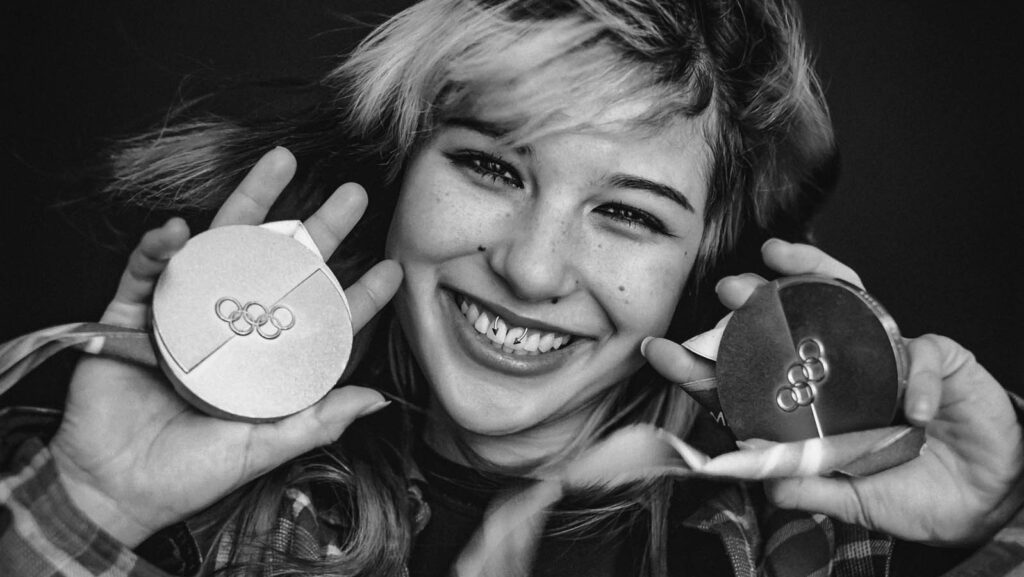
First there were the press conferences. Then there were the parties. Turns out, the first time figure skater Alysa Liu got a proper sleep after winning Olympic gold was on her flight home from Milan a few days later. “We got upgraded, because they were like, ‘We can’t put you in the back of the plane!’” she says, grinning. “So, shout-out to those Delta flight attendants.”
Since then, Liu has been getting used to a hero’s welcome, from the Oakland creamery that offered her ice cream for life to the paparazzi who followed her car after a Today show appearance. Gearing up for her Rolling Stone photo shoot at members-only club Moss New York, she’s presented with boxes of goodies: a lemon ricotta pound cake, white chocolate matcha crinkle cookies, brown butter chocolate chip cookies, and a Lucky Charms concoction devised especially for Liu.
The Path to Individuality
America loves a sweetheart, and we love a winner even more. But Liu has captivated the country with more than just her skill and her charm. At 13, she was the youngest person ever to win the women’s National Championship. At 16, she placed sixth at the Beijing Olympics, earned bronze at the World Championships, and then abruptly quit the sport in a post on Instagram. Her return to figure skating two years later was more than just an incredible comeback; it was a testament to individuality and the power of finding success on one’s own terms.
With her halo hair, her “smiley” piercing, and her vibey performances to Lady Gaga and Laufey, Liu is no ice princess; she eats what she wants, wears what she wants, skates how she wants — and looks like she is having a ball doing it. “My goal was to just do amazing programs,” she says. “And the moment I finished my free skate and also the gala program, that’s when I was like, ‘Yeah, my goal is complete.’”
Early Beginnings and the Struggle of Elite Training
Liu’s introduction to the sport began at age five when her father took her and her sister to the rink. She recalls falling in love with the speed and the sensation of gliding. However, the transition from a child enjoying the ice to a competitive athlete brought significant challenges. By sixth grade, she was homeschooled, a learning environment she struggled with due to her ADHD.
Reflecting on her early success at 13, Liu admits to a sense of detachment. “I blocked them out,” she says of her memories from that time. “Every time I see a clip of it, it’s like I’m watching a movie. I know that’s me, but it’s like I’m seeing what everyone else is seeing.” She describes being in a constant state of fight-or-flight, training from 7 a.m. to 7 p.m. daily, driven by the fear of losing her abilities if she took a single day off.
Watch the Video Interview
Finding Freedom and the Return to the Ice
After walking away from the sport at 16, Liu finally found the freedom to be her own person. She obtained her driver’s license, spent time with friends, and experienced life outside the rigid structure of the rink. It was during a ski trip in 2024 that she felt a familiar adrenaline rush, leading her to step back onto the ice with a friend. What started as a weekly outing eventually evolved into a full-fledged return to competition.
When she decided to return, she had to convince her coach, setting clear boundaries. “I’m just not going to do that,” she told him regarding previous expectations. “I want to pick my own music.” She also addressed her father’s involvement, noting that while he was invested in her career, she had to reclaim her own agency. “I didn’t want him to care at all, because it shouldn’t affect him as much as it did the last time.”
Today, Liu views her past struggles as essential to her growth. “If I didn’t hit rock bottom so many times, I could not have gone up,” she says. “So that’s why I say I wouldn’t tell my younger self a thing. I want her to go through all that, because that’s the only reason why I’m here.”