

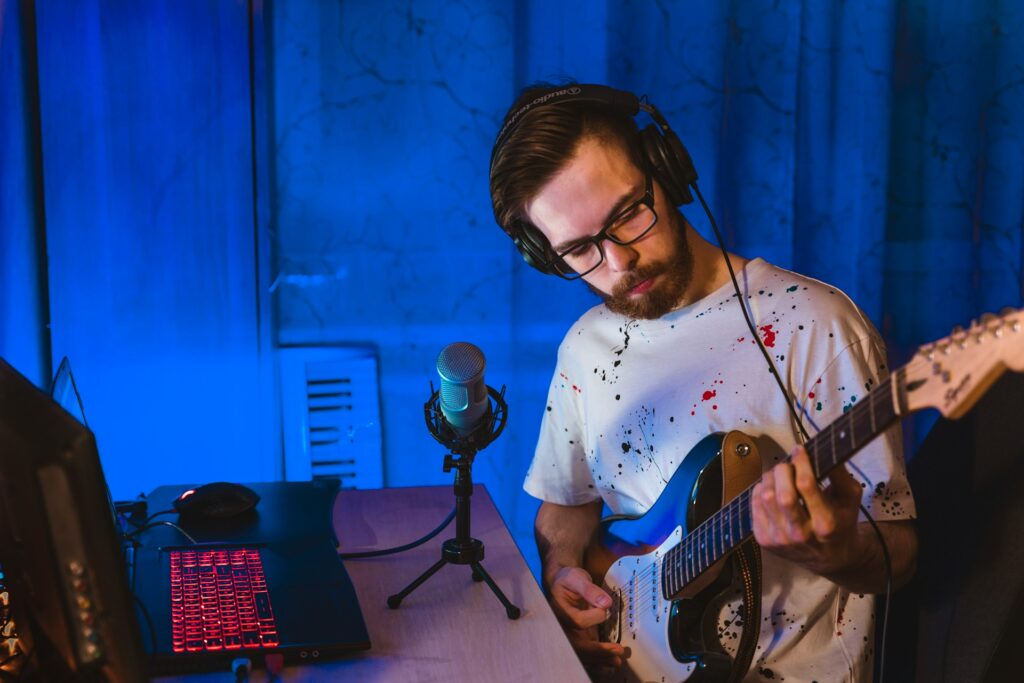
The New Sonic Standard: Why Indie Artists Are Winning with Authentic Imperfection
Across streaming platforms, bedroom producers and independent artists are racking up millions of plays because of sonic imperfection. In a landscape increasingly saturated with AI-generated music and hyper-compressed major label releases, listeners are hungry for something that feels alive. Authenticity has become the new competitive advantage; it sounds like a breath before a vocal take, the slight wobble in a guitar string that wasn’t quite tuned, or the subtle room noise that reminds us a real human made the music.
The Tyranny of the Perfect Mix
For decades, the industry standard was clinical precision. Records were tuned, timed, and treated until every rough edge was sanded off. Auto-Tune corrected the pitch, quantization locked every beat into a grid, and limiters pushed loudness to the absolute ceiling. The result was music that was technically flawless but often felt emotionally distant.
While platforms like Spotify have dismantled the “loudness war” that drove over-compression, a deeper shift is occurring. Listeners—especially younger generations raised on lo-fi YouTube streams and TikTok voice-memo demos—have recalibrated their ears to prefer texture over perfection. Studies have long documented that slight pitch and timing variations in vocals create emotional resonance that pitch-perfect recordings simply cannot replicate. The “human error” is, in fact, the emotional signal.
Defining Authentic Imperfection
It is important to clarify that this is not a call to record carelessly. Authentic imperfection is intentional texture—the conscious choice to preserve the details that reveal a human hand at work. It is the room sound left in a vocal or the pick scrape before a chord. This is distinct from low production value. Artists like Billie Eilish demonstrate that you can have high craft alongside raw feel. The goal is not to sound poor; it is to sound present.
The Indie Advantage
Major labels are, by nature, risk-averse institutions. They invest heavily in recording infrastructure and expect returns that justify pristine, committee-approved production. That institutional pressure is precisely what often smooths the life out of a recording. Independent artists have no such pressure. This freedom has always defined indie music, and in 2026, it is finally being rewarded commercially at scale.
The streaming data supports this trend. Lo-fi hip-hop, folk-influenced indie pop, and acoustic singer-songwriter content—genres that embrace raw sonic texture—consistently over-index on playlist saves and repeat listens compared to heavily processed mainstream pop.
Weaponizing Imperfection
For independent artists, building a sound that leverages authentic texture involves several key strategies:
- Leaving Space in the Mix: Intentional production knows when silence and sparseness communicate more than another layer of synth.
- Preserving Vocal Humanity: Micro-variations in pitch and the catch in a breath are the details that make a listener feel seen.
- Embracing Room Sound: Recording in non-neutral spaces imprints a sonic identity onto a track that no reverb plugin can fully replicate.
- Trusting the First Take: The first take often contains emotional truth that disappears after endless repetition.
The rise of AI-generated music has, paradoxically, supercharged the value of human imperfection. When unlimited amounts of technically flawless music can be generated in seconds, the human fingerprint on a recording becomes a rare commodity. The more perfect AI music sounds, the more imperfect human music resonates. In 2026, that evidence of a human being standing in front of a microphone and meaning every word is worth more than ever.