
Inside the Private Notebooks of Jazz Legend Sonny Rollins
Sonny Rollins may have been a celebrated jazz artist, but behind the scenes, the Grammy Award winner and National Medal of Arts recipient was a bit of an enigma. In a collection of personal writings compiled in a 2024 book, the saxophonist and composer who was once called “the only jazz recluse” revealed that he often doubted the fanfare surrounding him. “I face the startling and intriguing reality that there is within me a force working hard for my own destruction,” he wrote, “even as I try to improve.”
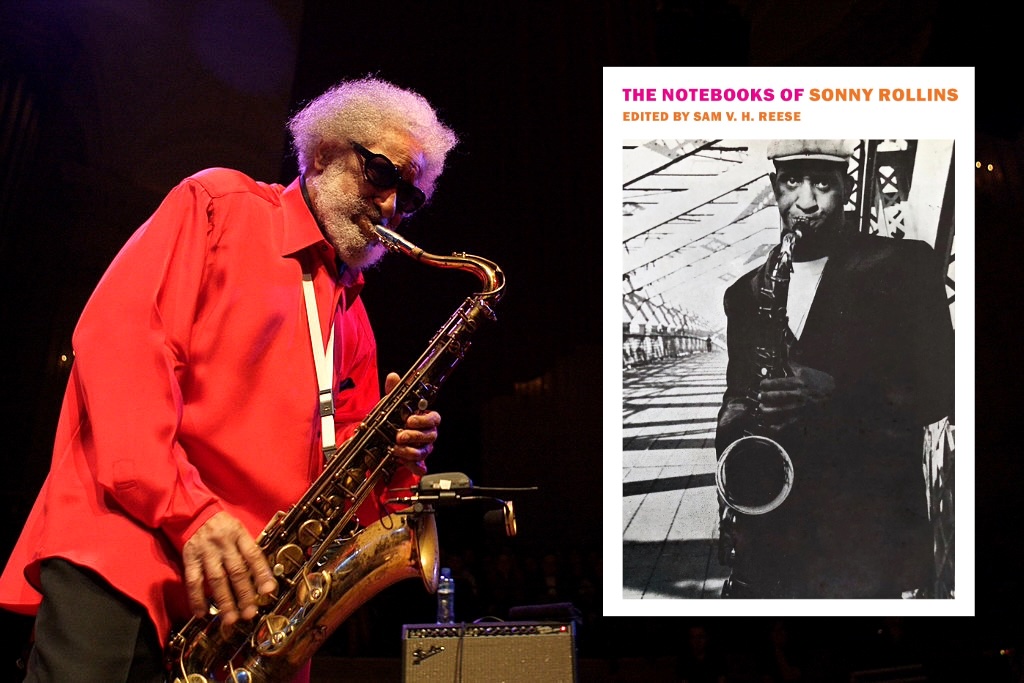
The intimate reflections are detailed in The Notebooks of Sonny Rollins, a collection of the jazz legend’s personal notes spanning from 1959 to 2010. The book is edited by the jazz critic and scholar Sam V.H. Reese, who also provides an introduction.
The Notebooks of Sonny Rollins is trending following the passing of Sonny Rollins. Though he performed in front of audiences around the world, the musician was also dedicated to solitary practice. As the book describes, “A turning point in that legendary career came in 1959, when Rollins stepped back from performing and recording to begin a new regime of musical exploration, which saw him practicing for hours, sometimes all through the night, on the Williamsburg Bridge.”
This was also the period when he started writing in the notebooks that would become a “trusted companion in years to come,” Reese writes, “as a place for Rollins to ponder art and life and his own search for meaning in words and in images.”
Rollins’ notebooks were eventually donated to the New York Public Library, and were said to have taken up six boxes. The notes reveal everything from the musician’s to-do lists, to rehearsal notes and songwriting snippets. He ruminates on nightclub culture, racism, and the conundrums of the inner life. Rollins also lists his “motives and aims” in life, writing that his one wish is to “uplift and inspire people.”
As Rollins wrote, the saxophone allows people to see a “better and more beautiful world. We saw, and see, the means towards a better human being; towards the perfection of our selves.”
For those looking to dive deeper into the life of the legend, Saxophone Colossus, the first full biography of the jazz icon, is also available. Released in 2022, the book features more than 200 interviews with Rollins himself, as well as his family members, close friends, and collaborators.
Part jazz oral history told in the musicians’ own words, part chronicle of one man’s quest for social justice and spiritual enlightenment, this is the definitive biography of one of the most enduring and influential artists in jazz and American history.
Rollins died on Monday at his home in Woodstock, New York. He was 95.