
‘The Devil Wears Prada 2’ Dresses Up the Death of Journalism
A long time ago, in a Manhattan far, far away, a young commoner walked into a magical kingdom named Vogue and took a job as an assistant to Queen Wintour. She eventually escaped the clutches of her regal tormentor and wrote a roman à clef about her experiences. Names were changed, and the story was technically categorized as fiction. But everyone knew who this “Miranda Priestly” character, with her Hermès scarf and sharp tongue, really was.
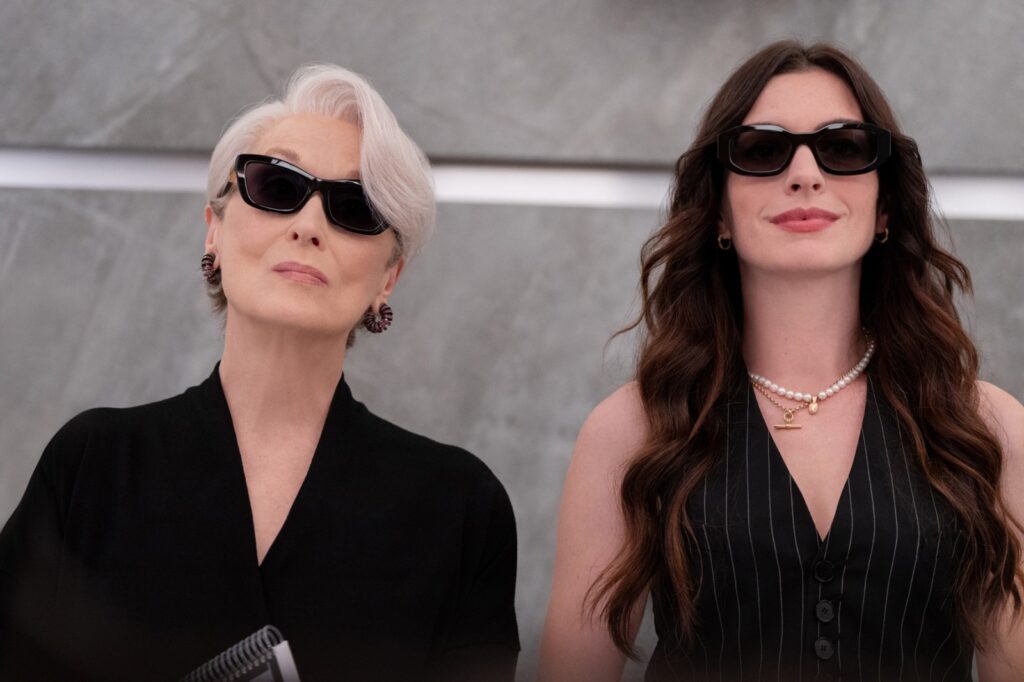
It helps to remember that Lauren Weisberger’s 2003 novel The Devil Wears Prada began life as a form of literary payback, and when the movie adaptation hit screens in 2006, the era of celebrity editors-in-chief and hostile workplaces was still in full swing. Poor Andy Sachs — in the form of the Disney princess-eyed Anne Hathaway — may have suffered the verbal lashings of a boss who expected whims to move worlds on her behalf. But at least this junior assistant got free handbags and a major glow-up out of it. Also, a note to filmmakers: If you want to make your villain imperious and more than a pale imitation of the real thing, cast Meryl Streep. There’s a reason Miranda Priestly remains one of the Oscar-winner’s most beloved roles and a hall-of-fame malefactor.
The Modern Media Landscape
The Devil Wears Prada 2 knows that it’s got to walk the fine line between giving the people what they want — cattiness, couture, glamor, the glory that is a Stanley Tucci eye roll — and acknowledging that a lot has happened in two decades. Welcome to 2026, where treating your assistants like dirt is an HR violation, billionaires buy newspapers and publishing houses to pad portfolios, and that quaint little thing we call journalism has suffered an existential death by a thousand clicks. Andy Sachs is now an award-winning investigative reporter, which doesn’t stop her or her team from being fired by group text.
Miranda Priestly continues to run Runway, the faux-Vogue of the Devil-verse, but a scandal involving a puff piece on a toxic brand means she’s got to suffer the slings and arrows of a snarky meme tsunami. Everyone’s budgets have been slashed. Everyone’s frantically chasing metrics. How’s a Machiavelli in Manolo Blahniks expected to properly dictate taste in this kind of distasteful environment?
A Return to the Runway
When Andy’s passionate acceptance speech during a New York Press Club event goes viral, Runway chairman Irv Ravitz offers her a job as the magazine’s features editor. Miranda doesn’t remember her former assistant, and is not happy with this mandate from on high. Still, there are fires to be put out, so the two of them and Runway’s fashion director, Nigel Kipling, head to Dior so they can salvage ad dollars. Oh, and guess who’s now running that fashion house? Andy’s old frenemy and O.G. Priestly enabler Emily Blunt, who remains venomous after all these years.
Andy begins assigning tough features about meaningful topics outside of which accessories go best with your spring wardrobe, none of which hit with Runway readers. But they do strike a chord with Sasha Barnes (Lucy Liu), the recently divorced wife of billionaire über-nerd Benji Barnes (Justin Theroux). Given she is “the holy grail of interviews” and Andy, thanks to her pluck and moxie, secures Sasha’s first on-the-record chat in years, our hero manages to narrowly avoid getting sacked.
Director David Frankel understands that familiarity may breed contempt in other areas of life, but sequels, especially long-awaited ones to fan favorites, thrive on a light rinse and repeat. We may now hate the rich and the entitled, yet there’s still a market for peeking in on lobster lunches in the Hamptons, gala birthday parties for moguls, and spending seven minutes in heaven, a.k.a. Fashion Week in Milan. Everyone involved gives you the sense that they want to be there, which is more than you can say for a lot of late-in-the-game follow-ups.