
A History of Mario: From Arcade Avatar to Pop-Culture Icon
The Accidental Genesis of a Legend
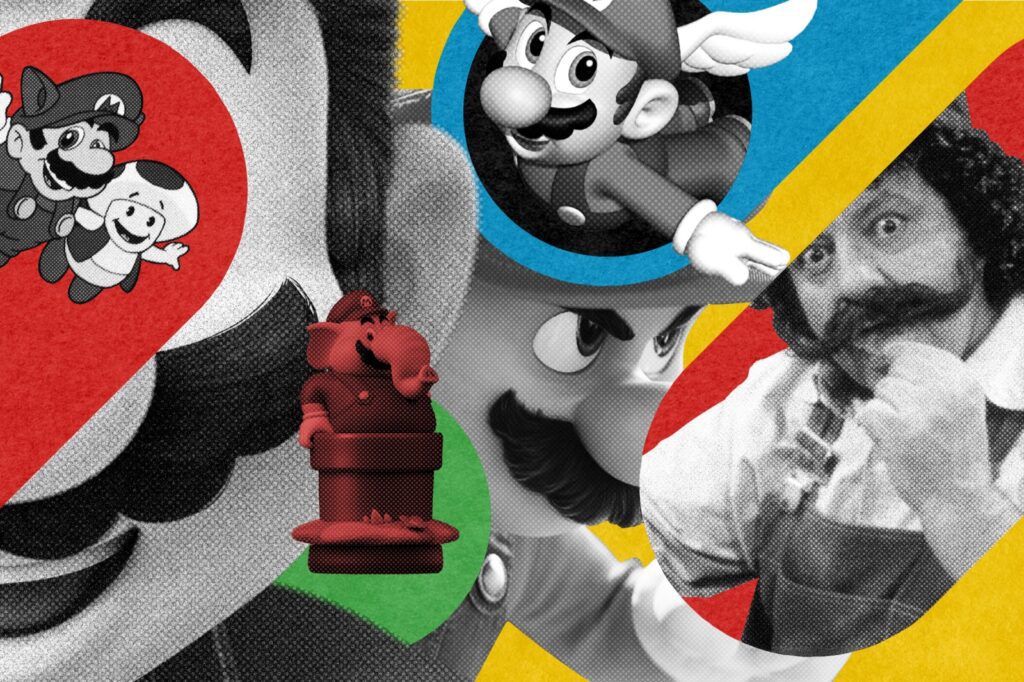
In 1981, legendary game designer Shigeru Miyamoto faced a creative impasse. His initial vision for a new arcade title centered on the iconic Popeye the Sailor, but licensing complications forced a pivot. The result was a stroke of genius: the sailor became a nameless plumber dubbed ‘Jumpman,’ and his antagonist, Bluto, was reimagined as the titular ape in Donkey Kong. This humble beginning laid the groundwork for what would become the most recognizable face in gaming.
By 1982, the character had been christened ‘Mario’ and possessed a defined, albeit simple, persona. Miyamoto describes him as a 26-year-old with a mustache who, while perhaps not the most intellectual, is defined by his guts, emotion, and heart.
The Golden Age of the Mushroom Kingdom
Mario’s true breakthrough arrived in 1985 with Super Mario Bros. for the NES. This title did more than just introduce a new set of mechanics; it effectively saved the video game industry following the 1983 crash. By refining the character’s agility and introducing iconic power-ups like mushrooms and fire flowers, Miyamoto created a masterclass in design that pushed the boundaries of what the medium could achieve.
Throughout the late Eighties, Nintendo expanded the franchise with Super Mario Bros. 2 and Super Mario Bros. 3, cementing Mario’s status as the face of the company. During this era, Mario was a blank slate, a versatile avatar that could be dropped into sports games like Tennis or Golf, or even refereeing in Punch-Out!!, proving his adaptability across genres.
Cross-Media Evolution and the 3D Revolution
As the Eighties closed, Mario’s influence bled into television with The Super Mario Bros. Super Show!, which introduced North American audiences to the character’s now-signature Italian-American accent and ‘Mamma mia!’ catchphrase. However, the 1993 live-action film proved to be a significant misstep, a ‘cyberpunk schlock-flick’ that alienated fans and caused Nintendo to retreat from film adaptations for three decades.
The mid-Nineties brought a new era of sophistication. With 1996’s Super Mario 64, the character was brought into the third dimension, voiced by Charles Martinet, and given a sense of life and personality that felt revolutionary. Simultaneously, Super Mario RPG introduced narrative depth and a comedic, self-referential tone that allowed Mario to exist as part of a ‘troupe of actors’—a concept Miyamoto has often used to explain why Mario can be a doctor in one game and a racer in another.
A Modern Cinematic Legacy
In 2023, Nintendo returned to the silver screen with The Super Mario Bros. Movie, a massive commercial success that prioritized lore and fan service. This year’s sequel, The Super Mario Galaxy Movie, continues this trend, signaling the birth of a broader Nintendo cinematic universe. Despite these high-budget adaptations, the core of Mario remains unchanged.
As Illumination CEO Chris Meledandri notes, Mario’s staying power is rooted in his ‘essential goodness.’ Whether he is a plumber, a doctor, or a hero in a galaxy far away, Mario remains a joyful, bright, and fundamentally human character—a testament to the enduring power of Miyamoto’s original vision.