
From Samurai Films to Westerns, 10 Movies to Watch Before Playing ‘Ghost of Yōtei’
Seeing cinematic inspiration in video games is nothing new. In 1988, Snatcher saw a young Hideo Kojima doing the best Blade Runner impression that the MSX2 platform would allow; even Spielberg himself got on the schtick as a writer-producer on 1999’s Medal of Honor, giving birth to a sea of military shooters aping the bloody chaos of Saving Private Ryan.
Beginning with the Uncharted series, and later perfected in The Last of Us, Sony Interactive Entertainment has made playable cinematic experiences its bread and butter over the last two decades. Pulling from the visual language of directors like Alfonso Cuarón and, again, Steven Spielberg, PlayStation games have become synonymous with theatricality to the point where Hollywood’s A-list — actors and directors — are lining up for their next gig to be in gaming.
But few recent games parade their kino inspirations as blatantly as Sucker Punch’s Ghost of Tsushima (2020). The open-world epic sees samurai Jin Sakai surviving a Mongolian invasion of his home island, symbolically resurrected as an avenging spirit to unite the lands to thwart the foreign threat. The game draws heavily from well-established samurai media tropes across film, manga, and anime, but like generations-worth of media, it all routes back to the work of Japanese auteur Akira Kurosawa. Tsushima even has a fully dedicated “Kurosawa Mode” that emulates the director’s early work with a monochromatic filter complete with dense film grain.
This week, the sequel Ghost of Yōtei arrives to continue building on Sucker Punch and Sony’s cinematic aspirations. Following a young woman named Atsu, whose family is slaughtered by a gang dubbed the Yōtei Six, the game’s story falls into its own bucket of familiar tropes as a revenge tale destined to be solved by the art of the blade.
Like its predecessor, Ghost of Yōtei traffics in samurai and revenge thriller clichés, although it manages to work in a more satisfying narrative that emphasizes the meditative beauty of its world on top of the hack and slash action. Once again, the game borrows heavily from the films of Kurosawa, bringing back the black and white mode to toggle, but also levels things up by assuming its audience might’ve seen or heard of more than just one Japanese director. A second filter, inspired by more contemporary filmmaker Takashi Miike, tightens the camera to close-ups and ratchets the gore factor by rewarding each strike with spurting geysers of blood.
Yōtei’s design differs from the first game’s by incorporating more of a spaghetti western tinge to its fated tale of vengeance, something its audio team worked heavily to incorporate into the score. It’s folksy but also trades in the dramatic buildups befitting a Mexican stand-off outside the corral.
Needless to say, Yōtei’s aesthetic is pulling from a lot of different places. After spending dozens of hours living in its decadently violent virtual world, it’s very likely that you’ll want to extend the vibes to your other viewing habits.
To fully appreciate the many influences that made Ghost of Yōtei, these are the essential movies to watch.
-
‘Yojimbo’
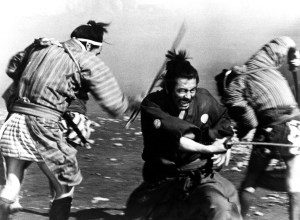
Image Credit: Everett Collection One of the clearest influences on Ghost of Yōtei (as stated by the devs themselves) is Akira Kurosawa’s Yojimbo. Starring the director’s frequent collaborator, Toshiro Mifune, as a wandering rōnin — an outcast samurai without duty — who embroils himself in a local gang war, Yojimbo is the kind of film that basically set the template for lone hero badassery.
The story follows Mifune’s rōnin, who goes by the fake name “Sanjuro,” as he signs up to serve as a bodyguard (yojimbo) for one of two rival yakuza clans in a small town. Using his wiles more than his blade, Sanjuro’s machinations cause the rift between gangs to boil over. The main character’s tattered appearance belies his guile, mirroring the ways Atsu will need to outwit her opponents rather than use brute strength in Yōtei. And if you feel like you’ve seen Yojimbo’s plot somewhere before, you’ve likely seen its spaghetti western remake, Sergio Leone’s A Fistful of Dollars (1964), starring an extra-squinty Clint Eastwood as The Man with No Name.
-
‘Lady Snowblood’
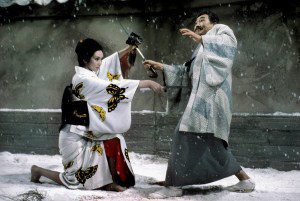
Image Credit: Everett Collection One of Japanese cinema’s most visceral revenge classics, Toshiya Fujita’s Lady Snowblood is famously the inspiration for Quentin Tarantino’s Kill Bill duology, and comparing them side-by-side it’s apparent. The 1973 film’s story follows Yuki, a woman born and raised in prison, whose sole purpose is to avenge the murder of her father and brother, and the rape of her mother who dies shortly after childbirth.
With nonchronological storytelling and sharp introductions to each of her family’s killers, the impact of Lady Snowblood can be seen in the DNA of movies across all genres, and it’s the most direct parallel to the plot of Ghost of Yōtei — down to the savage executions juxtaposed to elegant backdrops. It’s the quintessential female revenge flick.
-
‘Once Upon a Time in the West’
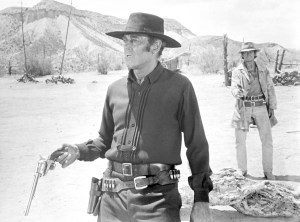
Image Credit: Everett Collection The ties between Japanese samurai films and westerns runs deep, largely in part to the work of director Sergio Leone. While John Sturges’ The Magnificent Seven (1960) was quick to the cut at remaking a Kurosawa classic (Seven Samurai), Leone built a whole career on weaving in the Japanese titan of filmmaking’s aesthetic into his own. That witch’s brew of cinematic confluence hit its apex with 1968’s Once Upon a Time in the West.
Starring a murderer’s row of talent (some as actual murderers!), including Claudia Cardinale, Henry Fonda, and ol’ Charlie Bronson, Once Upon a Time in the West is spaghetti western by way of a more somber crime drama. With a more meditative and languid pace than Leone’s previous punchy westerns, it’s a film more interested in a lived-in world than pressing action — something Ghost of Yōtei players should be comfortable with after long stretches riding through the shade of cherry blossom trees in between missions.
-
‘The Sword of Doom’

Image Credit: Everett Collection Moral gray zones aren’t uncommon in samurai media; rōnin are prone to doing all types of horrific shit. But Kihachi Okamoto’s 1966 film The Sword of Doom leans full-tilt into the terror of an unbeatable swordsman with zero humanity.
The plot centers on Ryunosuke Tsukue (Tatsuya Nakadai), a samurai whose prowess with a katana is unmatched — as everyone from helpless pilgrims, monks, and children will find out. Part samurai flick, part horror movie, The Sword of Doom sees Tsukue mindlessly killing people across the land for little more than sport, although he barely registers any satisfaction from the violence. Simultaneously hunted by assassins and then family of those he’s slain, on top of being haunted by his victim’s ghosts, the swordsman mentally unravels, growing even more lethal in his psychosis.
Its story is more of a cautionary tale than a heroic one, but it might make players think twice about the ludonarrative dissonance they feel when slaughtering waves of enemies on their seemingly righteous path in Ghost of Yōtei.
-
‘Kill Bill: The Whole Bloody Affair’
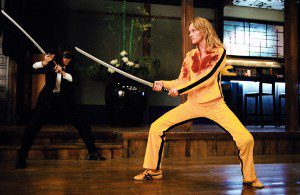
Image Credit: ©Miramax/Everett Collection Ever the connoisseur of cultural pastiche, Quentin Tarantino’s Kill Bill stood apart from his early crime thrillers as a cannonball leap into the martial arts genre. Heavily inspired by Lady Snowblood, among countless other movies only known by Letterboxd cinephiles, the films churned Chinese, Japanese, and American schlock into its own highly influential beast.
Originally released in two parts, in 2003 and 2004, Tarantino himself considers the story to be one complete film, generally dubbed The Whole Bloody Affair. Following The Bride (Uma Thurman) on a quest to kill her former mercenary leader-slash-lover, the achronological plot bounces between her many murders of old friends and the backstories that brought them together. At the time of its release, it felt like movies like Kill Bill weren’t made anymore — the product of a bygone era. Ironically, it feels yet again like movies like Kill Bill aren’t made anymore; but maybe there never really were any. Say what you will about Tarantino, his distinct directorial fingerprint allows his movies to remain instantly recognizable as part of the cinematic lexicon, even when he’s still cobbling together other people’s ideas. Ghost of Yōtei is most impressive when it’s doing just the same.
-
‘13 Assassins’
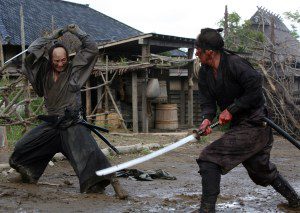
Image Credit: Magnet Releasing/Everett Collection While plenty of the older films on this list are filled with blood squibs and splatter, Takashi Miike’s 13 Assassins adds a contemporary craftsmanship to viscera that can make even horror sickos wince. Set in the Nineteenth century, toward the end of the Edo period, the film follows a group of warriors and hunters on a suicide mission to slay a sadistic feudal lord before he ascends to the Shogunate Council.
Often compared favorably to Kurosawa’s films, 13 Assassins sees Miike at the height of his power, directing a film that’s visually arresting — frame by frame, it’s picturesque — and pulse-pounding in its action. As 13 warriors wage guerilla warfare on an army of hundreds, towers crumble, bodies are crushed and contorted, and only a select few make it out alive. It’s one of the best — if not the best — samurai film of this generation. The most modern of the films on this list, 13 Assassins looks the closest to what players will see in Ghost of Yōtei, even before the dedicated “Miike Mode” is activated.
-
‘The Tale of Zatoichi’
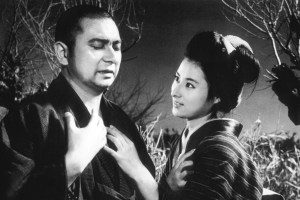
In a field as broad a “samurai movie,” there’s plenty of wiggle room to play with genre. For every historical epic and generational classic, there should be a balance. The Zatoichi films are a counterweight to elevated drama in the form of straight up serials, centered on the blind swordsman who wanders into trouble wherever the road takes him (think: Kung-Fu meets Mr. Magoo).
Over the course of 26 films and four seasons of Japanese TV, actor Takeshi Kitano imbued Zatoichi with a deep sense of humility; constantly underestimated because of his class status and condition. Like all great underdogs, Zatoichi is easy to root for, again and again, and movies are easy to jump into at any point. But the first one, The Tale of Zatoichi (1962) serves as the best starting point with a straightforward holistic introduction to a Japanese icon. And while most samurai films have clear start and end points, the adventures of Zatoichi fall in line more closely with the open-ended nature of the experience players will have in-game.
-
‘Harakiri’
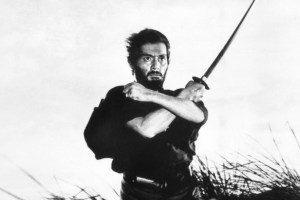
Image Credit: Everett Collection While most revenge stories are predicated on inflicting suffering to those responsible, Masaki Kobayashi’s Harakiri (1962) takes a different route, instead focusing on a man insistent on bending ritualistic tradition to shame lords who abuse their authority. And what a story it is!
Bouncing between points in time, the film begins with a rōnin who, through extenuating circumstances, is forced to suffer a horrible bastardization of the normally honorable seppuku suicide ritual. The plot then shifts to another rōnin, requesting his own seppuku, only to be denied by the snide Iyi Clan estate. What follows is a series of flashbacks charting the history of both men, bringing to light the hypocrisy of the sniveling feudal aristocracy, all culminating on a jaw-dropping climax. Harakiri is a movie packed with deep emotional cuts that tells a compelling tale of defiance that’s not just driven by wall-to-wall violence. Throughout their time with Ghost of Yōtei, players will find that violence (while fun in-game) isn’t always the balm for righteous fury.
-
‘Shogun Assassin’
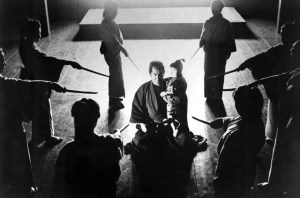
Image Credit: ©Universal/Everett Collection It might sound like sacrilege to suggest an American-made mash-up dub of two Japanese classics, but 1980’s Shogun Assassin is worth the faux pas, even just as a flavor text for the original series it pulls from. Combining the first two films from the Lone Wolf and Cub series, Sword of Vengeance (1972) and Baby Cart at the River Styx (1972), Shogun Assassin streamlines the origins of its protagonist duo, former executioner Ogami Ittō (Tomisaburo Wakayama) and his toddler son Daigoro (Akihiro Tomikawa).
A product of the exploitation era, Shogun Assassin and, by proxy, the six Lone Wolf and Cub films are much more sensationalist entertainment than the standard samurai fare. The series follows the father-son pair as they travel across the lands as vagrants, full baby carriage in tow, as they’re constantly besieged by bandits, ninja, and fantasy-level assassins. The films, and the original manga they’re based on, are credited with popularizing the “lone wolf and cub” trope seen in just about a million things (notably: The Last of Us), wherein an expert killer coddles a child while laying waste to all threats. While Ghost of Yōtei draws inspiration from many traditionally acclaimed films, its base impulses often give way to the kinds of glorious excess exemplified by Shogun Assassin.
-
‘Seven Samurai’
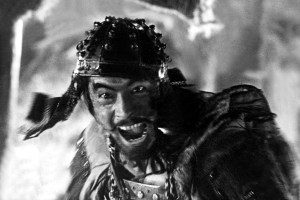
Image Credit: Everett Collection Sure, it’s the most obvious choice imaginable for a samurai movie recommendation, but that doesn’t take away from the mastery of Akira Kurosawa’s Seven Samurai (1954). The most expensive Japanese film ever at the time, its Ben-Hur level ambitions for telling a historical samurai epic are second to none. Every subsequent samurai film — most of cinema, really — and all derivative media thereof owe something to Seven Samurai.
The concept of a mismatched group of misfits tasked with an insurmountable challenge is rarely ever done with as much pathos and expert storytelling as it is here. It outmatches the heights of even the best westerns of the time, and even one of those (Magnificent Seven) is still just a remake of Kurosawa’s masterpiece. It feels like a layup, but it’d be foolish to assemble a list of films that inspired Ghost of Yōtei while excluding the most essential foundational text to the game’s DNA.